-
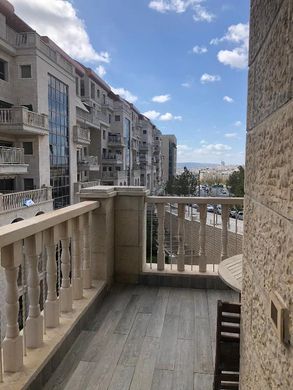 Apartment in Jerusalem, Jerusalem District€ 2,19080 m²
In the nation's buildings, a huge sukkah balcony of about 45 square meters, an elevator, parking and a warehouse. New building, immediate entry. Flexible...
Presented by תיווך טליה -
-

-

In the nation's buildings, a huge sukkah balcony of about 45 square meters, an elevator, parking and a warehouse. New building, immediate entry. Flexible...


luxury guide
7 luxury properties are listed in Jerusalem today, and the number tells only part of the story. This city draws international buyers for reasons that go well beyond lifestyle or return on investment. Jerusalem sits at the center of a broader region that includes Tel Aviv to the west, Bethlehem to the south, and the Judean Hills stretching toward Jericho and the Dead Sea. Ben Gurion International Airport connects the city to every major European and North American hub in three to four hours. The market spans apartments, historic residences, penthouses and urban villas, with a buyer profile unlike any other city on earth: diaspora families, institutional investors, and private collectors of unique real estate all active in the same market at the same time.
Prices in Jerusalem's luxury segment range from €1,328,314 to €41,417,377, with an average value of €12,392,459. Floor areas run from 74 to 1744 sqm. The variables that move the needle are straightforward: proximity to the Old City walls, panoramic terraces with views over the domes and minarets, and address within the established western residential neighborhoods. A property in Rehavia or Talbieh commands a significant premium over anything in the outer districts. Compared to Tel Aviv, Jerusalem's luxury market is less volatile and more constrained by supply. Almost nothing new is built in the historic core, which means prices in prime locations respond to demand with little elasticity. That is not a risk. It is an argument for buying sooner rather than later.
Rehavia defines the standard for Jerusalem luxury. Limestone buildings from the 1930s, wide tree-lined streets and a residential calm that surprises first-time visitors: this neighborhood rarely sees new inventory, which is exactly why buyers want it. Talbieh, directly adjacent, shares the same architectural character and adds proximity to the official residences and cultural institutions along Jabotinsky Street. Yemin Moshe, perched above the Hinnom Valley with a direct view of the Old City walls, holds some of the most photographed residential addresses in the Middle East. Further out, Ein Kerem retains a village character that stands apart from the urban density of the center, with stone houses set among olive trees and terraced gardens. Ma'alot Dafna and the Ramot ridge offer larger plots and modern construction for buyers prioritizing space. Each of these areas has its own identity, and the right choice depends entirely on what kind of city life the buyer is looking for.
Jerusalem has a structural demand base that does not correlate with standard economic cycles. Diaspora buyers, international investors with cultural or spiritual ties to the city, and a near-total freeze on new construction in the historic center create sustained upward pressure on prices. At an average of €12,392,459, Jerusalem still trades at a discount to Tel Aviv's prime market, with stronger long-term appreciation potential in the Old City perimeter and the historic western neighborhoods.
Jerusalem is a fully functioning capital with world-class universities, major hospitals, an expanding light rail network and a food scene that has evolved considerably in the last decade. The climate is dry Mediterranean: warm summers, cool winters with occasional snow. The international residential community is large, multilingual and spread across the western neighborhoods.
Every building in Jerusalem is clad in local limestone by municipal law. That single regulation gives the city a visual coherence and a material quality that no other capital in the world can match. Buying in Jerusalem means owning something built from the same stone that has defined this city for three thousand years. No developer, anywhere, can reproduce that.