Montpellier's apartment market is one of the most active in southern France, and the numbers back this up: 255 listings are currently available across the city and its most sought-after districts. Buyers come from across Europe. The British arrive for the climate and the TGV connection to Paris. Italians and Spaniards look at Montpellier as a genuinely affordable alternative to the Côte d'Azur. The apartments that attract the most attention are in the historic palaces of the old city, where eighteenth-century facades conceal high ceilings, original stone staircases and private courtyards. Nearby Sète, Palavas-les-Flots and the medieval city of Pézenas complete a regional picture that makes Montpellier particularly attractive for international buyers.
How much does an apartment cost in Montpellier
Prices for upscale apartments in Montpellier start at TRY 1,041,524 for compact units in the historic centre and reach TRY 2,603,810 for large top-floor properties with panoramic terraces overlooking Place de la Comédie or the city's historic gardens. The average price stands at TRY 1,396,589. Floor areas range from 82 to 178 sqm, with an average of 108 sqm and between 1 and 6 bedrooms. Floor level matters enormously here. A fourth-floor apartment in a seventeenth-century building without a lift can be priced forty percent below a comparable unit with private lift access. Private concierge, wine cellar, internal parking and courtyard garden are the features that push values upward. The short-term rental market runs year-round, driven by one of France's largest universities and a steady flow of international visitors.
Where to buy an apartment in Montpellier
L'Écusson, the historic centre enclosed by its medieval ring, is where the most prestigious apartments are found. Buildings here date from the seventeenth and eighteenth centuries, with painted ceilings, stone vaults and windows opening onto quiet streets. Antigone, the neoclassical district designed by Ricardo Bofill along the Lez river, offers a completely different atmosphere: vast floorplans, rational layouts and views over symmetrical gardens. Port Marianne draws investors and younger buyers looking for contemporary architecture and direct tram access to the city centre. The Beaux-Arts district, close to the Faculté de Médecine, is where Montpellier's established residential market sits. Ma the most consistent price driver across all these areas is the same: building period, floor level and the quality of the shared spaces.
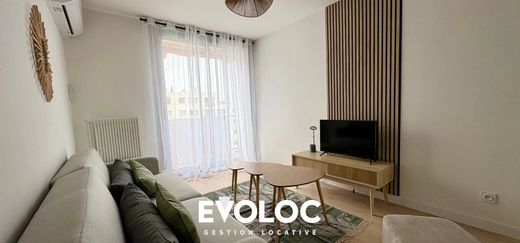 Apartment in Montpellier, HéraultTL 106,300 month83 m² 3Presented by Janelle LEPINE | Evoc Immobilier
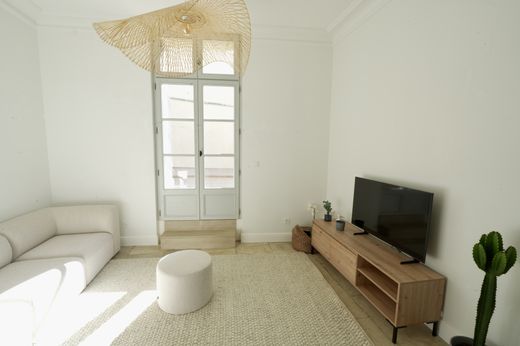 Apartment in Montpellier, HéraultTL 127,600111 m² 6 3
 Apartment in Montpellier, HéraultTL 138,200180 m² 2 3


