Montevideo's apartment market stands out across South America for one clear reason: it works. With 52 apartments for sale, the Uruguayan capital offers a level of legal transparency and market stability that buyers from the United States, Europe and Argentina actively seek out. High-rise towers facing the Río de la Plata, mid-century buildings with decorative façades in the Ciudad Vieja, and contemporary units in the residential neighborhoods of Pocitos and Carrasco make up a market that rewards buyers who understand what they are looking at. Punta Carretas, Parque Rodó and Punta Gorda are the other names that come up in every serious conversation about buying here.
How much does an apartment cost in Montevideo
Prices start at €320,000 for well-located units in transitional neighborhoods and reach €2,200,000 for full-floor apartments on upper floors with unobstructed river views. The average price sits at €610,000. Floor areas range from 14 to 316 sqm, averaging 150 sqm, with between 1 and 4 bedrooms. View is the single biggest price driver here. An apartment looking directly at the estuary commands a significant premium over an equivalent unit facing inland. Buildings with 24-hour concierge, rooftop pool, gym and underground parking define the top tier. Ma there is something else that matters: Uruguay prices real estate in US dollars, which gives international buyers a straightforward and predictable transaction from start to finish.
Where to buy an apartment in Montevideo
Pocitos is the benchmark. Apartments here sit within walking distance of the Rambla, the long coastal promenade that defines life in Montevideo, and demand from both local and foreign buyers stays consistent year-round. Punta Carretas draws buyers who want a quieter residential feel without giving up amenities: the neighborhood has mature building stock, reliable management and good retail. Carrasco, closer to the international airport, attracts buyers looking for larger units, sometimes duplex apartments with private outdoor space. The Ciudad Vieja surprises most first-time buyers: converted early twentieth-century buildings with high ceilings, exposed concrete and original architectural details, priced below the coastal neighborhoods. Punta Gorda rounds out the picture with smaller buildings, fewer units per floor and direct views across the water toward Argentina.
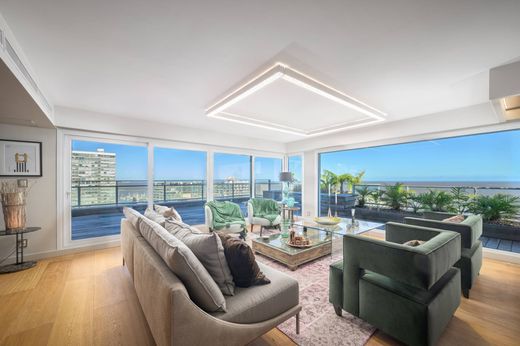 Apartment in Montevideo, Municipio BCollection€ 9,600 month322 m² 5 2
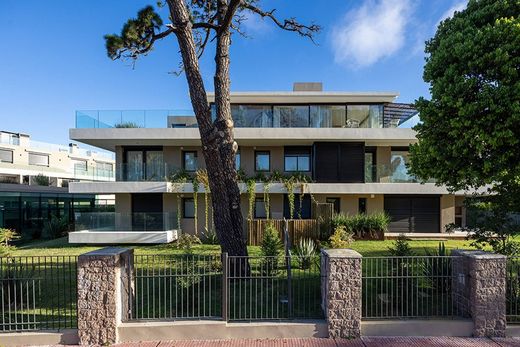 Apartment in Montevideo, Municipio BCollection€ 3,050 month342 m² 3 3
 Apartment in Montevideo, Municipio BCollection€ 2,250 month133 m² 3 3


