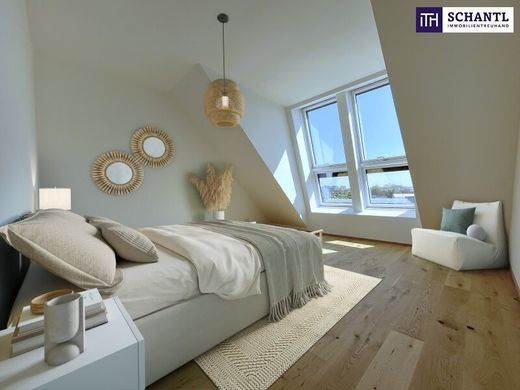
Vienna's penthouse market is one of Central Europe's most underrated luxury segments. 23 penthouses listed in the Austrian capital tell only part of the story. The real picture is a city where historic Ringstrasse palaces, early twentieth-century Gründerzeit buildings and contemporary high-rises all offer top-floor living of completely different character. Buyers come from across Europe and beyond, drawn by Austria's political stability, the city's cultural weight and a rental market that performs consistently. The first district, Döbling and Hietzing lead the rankings, but strong options exist across the inner districts. Vienna is serious. And its penthouses reflect that.
How much does a penthouse cost in Vienna
Penthouse prices in Vienna range from €498,000 for upper-floor apartments in the outer districts with partial city views, up to €15,900,000 for landmark historic buildings in the first district with full roof terraces and direct lift access. The average sits at €4,165,870. Sizes run from 65 to 367 sqm, averaging 222 sqm, with bedroom counts between 2 and 4. The single biggest price driver is the view: a penthouse overlooking the Vienna State Opera or Stephansdom commands a significant premium over an equivalent unit with internal courtyard exposure. Private rooftop terraces, outdoor jacuzzis, wine cellars and direct elevator access are standard in the top tier. Ma the building matters just as much as the flat. A restored Gründerzeit palace in the Innere Stadt is a different asset class from a 1970s residential block in the fourteenth district, even if the floor area is identical.
Where to buy a penthouse in Vienna
The first district is the obvious answer for buyers who want historic grandeur. Penthouses here sit atop nineteenth-century palaces with coffered ceilings, formal reception rooms and rooftop terraces that look directly onto the city's most iconic skyline. Supply is tight and prices hold firm. The third district, Landstrasse, attracts buyers who want a central address with a more contemporary feel: recent conversions have produced some of the city's most technically sophisticated penthouses in architecturally distinctive shells. Döbling in the nineteenth is the choice for those who want a rooftop garden and a view of the Kahlenberg hills rather than the urban core. Hietzing, in the thirteenth, offers converted top floors in early twentieth-century residential palaces, often with private gardens and exceptional quiet. For a slightly lower entry point, Josefstadt in the eighth district delivers genuine character in neoclassical buildings at prices that still compare favorably with comparable cities. Salzburg and Graz offer alternative Austrian markets, but Vienna's depth of supply and international demand keep it in a league of its own.
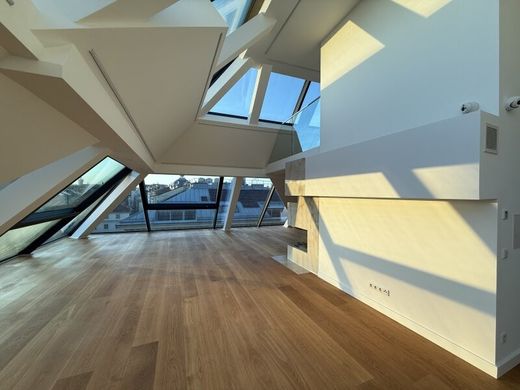 Penthouse in Vienna, Wien StadtCollection€ 16,500328 m² 3