Walk into a 16th-century farmhouse in the Sienese hills and ask the seller why it is priced at €1.2 million. The answer will have nothing to do with square metres. It will have everything to do with views, orientation, the age of the olive trees, and whether a northern European buyer visited in April. That is the first thing to understand about Italian property prices: the national average is a statistical artefact. The real market operates in micro-territories, and those territories follow rules that no aggregated data set captures cleanly.
With that said, the numbers matter. Italy’s average luxury listing price sits at €2,351,210, according to LuxuryEstate.com portal data, against a national all-market average of roughly €2,000/m² for residential property, per ISTAT 2025. The gap between those two figures tells you something about the bifurcation of this market: a deeply depressed interior combined with some of the most expensive coastal and urban real estate in Europe.
What Does the National Average Actually Tell You?
Italy’s national average residential price is approximately €2,000/m², per ISTAT (Italy’s National Institute of Statistics) 2025 data. The figure is mathematically accurate and practically useless. It averages Milan, where prime central apartments exceed €10,000/m², against Calabria, where coastal property sits at €900-€1,200/m². It includes €1 houses in Sicilian mountain towns alongside €30 million villas in Porto Cervo. The average describes a country, not a market.
More useful is the regional breakdown. According to Global Property Guide October 2025 data, average asking prices by major city are: Milan €5,500/m², Florence €4,514/m², Bologna €3,651/m², Rome €3,237/m², Naples €2,798/m², Genoa €1,706/m², and Palermo €1,496/m². These are all-property averages, not luxury-segment figures. In the premium tier, all of these numbers move significantly higher: the national average price per square metre for luxury apartments reached €7,418/m² in 2025, with the North-West leading at €8,044/m² and the Centre at €7,576/m², according to the Luxury Observatory 2026 Immobiliare.it in collaboration with LuxuryEstate.com.
The Italian luxury market spans, per LuxuryEstate.com portal data, from entry-level to properties priced at over €2 billion, with an average luxury listing price of €2,351,210. That figure is more representative of what an international buyer reading this article is likely to encounter. The luxury residential segment grew by +23% in supply and +22% in demand in 2025 compared to 2024, confirming a trajectory of sustained, structural expansion.
Lombardy and Milan: The Most Liquid Market in Italy

Milan is Italy’s financial capital and its most expensive city. Average asking prices across all properties reached €5,500/m² in 2025, and the figure has been on a consistent upward trajectory. In the prime Brera, Quadrilatero della Moda, and Montenapoleone districts, trophy apartments regularly exceed €10,000-€12,000/m². Torre Solaria, Milan’s tallest residential building, lists residences at prices that put it in the same tier as comparable London product. In the luxury segment specifically, the average price per square metre for apartments reaches €8,044/m² in the North-West macro-area, with the Luxury Extra tier, the highest classification, averaging €8,410/m² nationally.
Milan is Italy’s single largest luxury residential market, with a total luxury supply value of €8.74 billion, 12.2% of the entire national luxury stock, growing by 13% year-on-year. The current market offers 5,961 luxury listings, up 82% since 2020. The luxury apartment market in Milan dominates, with apartments representing 99% of the city’s luxury supply, ranging from renovated early 20th-century buildings in Porta Romana to new-build residences in Porta Nuova, where Bosco Verticale, the Stefano Boeri-designed vertical forest completed in 2014, set a benchmark for premium residential specification that subsequent developments have struggled to match. For full-floor living, penthouses in Lombardy span the city and the lakes, with 190 listings currently ranging from €515,000 to €15 million. The average time to sell a luxury property in Milan stands at 3.7 months, among the fastest in Italy.
Lake Como requires separate treatment. Average prices in the Como area rose +13.2% year-on-year over the most recent measured period. Bellagio and Cernobbio sit at the top of the desirability scale. The combined lakes area (Como and Garda) reached a total luxury supply value of €4.09 billion in 2025, up 75% since 2020, making it the fourth largest luxury market in Italy after Milan, Rome, and Versilia. With 2,352 listings and 3,358 luxury properties across the broader villa market in Lombardy, Como province drives a disproportionate share of the premium transactions. Average listing prices across the lake sit at €3,000/m², though ultra-prime lakefront positions in Cernobbio, Laglio, and Moltrasio regularly reach €6,000-€10,000/m².
Gross rental yields in Milan average around 5.0% across all property types, per Global Property Guide 2025, with net yields after taxes, agency fees, and maintenance settling at approximately 3.5-4.0%. Smaller units in central locations outperform larger properties on a yield basis. This remains patient capital territory for many international buyers, with price appreciation the primary investment thesis.
Tuscany: The Market Everyone Knows and Nobody Prices Correctly
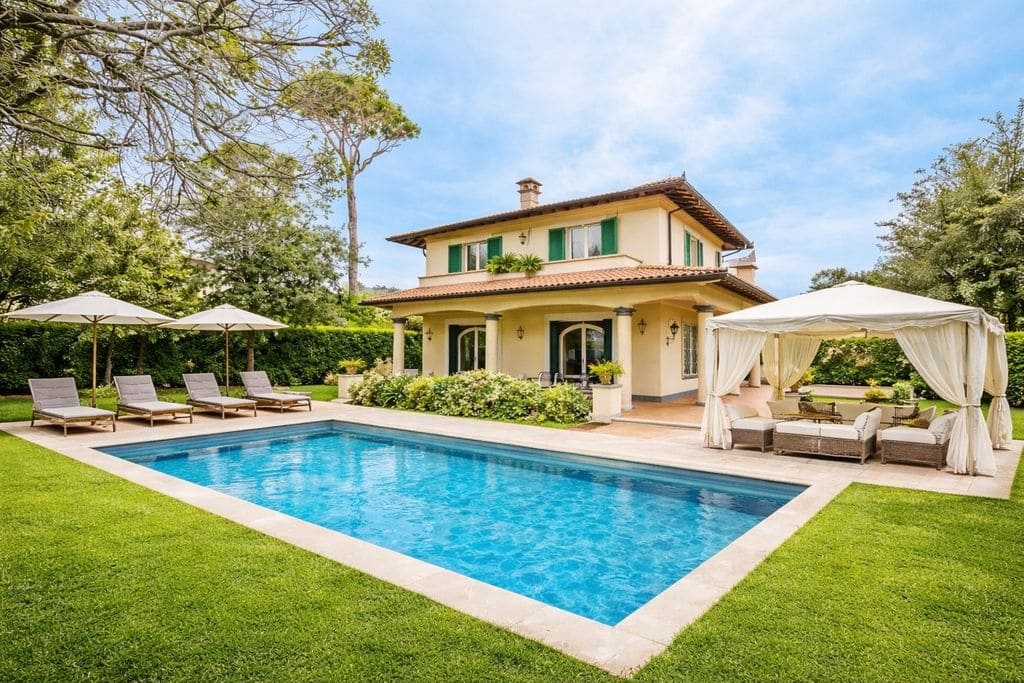
Tuscany is the region most English-speaking buyers approach first and most often misprice. The regional average sits in the mid-€1,000s/m² according to Italian registry data, but that figure is an average across rural agricultural land, post-war concrete in Livorno, and historic Florentine palazzi. These are not comparable assets.
Florence sits at €4,514/m² average across all property types, per Global Property Guide October 2025 data, and those prices rose +8.3% year-on-year through 2025, the strongest growth of any major Italian city in that period. In the luxury segment, Florence ranks sixth nationally by total luxury supply value at €2.94 billion, growing +29% in a single year, one of the fastest rates in Italy. The luxury apartment share has risen from 62% to 78% of total Florence luxury supply since 2020, reflecting strong international demand for urban historic product. In the Oltrarno, the historic left bank of the Arno, and around Piazza Pitti and Via Maggio, historic buildings with original frescoed ceilings change hands at €6,000-€9,000/m². The Florentine inventory, from Palazzo Baldovinetti in the Oltrarno to comparable noble residences, represents the apex of what is available among apartments in Tuscany.
Outside Florence, the market fragments immediately. The Chianti area, the so-called “Chiantishire” that British buyers colonised in the 1980s, has sustained high prices for decades. The Versilia coast, particularly Forte dei Marmi, the preferred summer address for Milanese old money since the early 20th century, is Italy’s single largest luxury tourism market by aggregate value at €4.64 billion, growing +18% year-on-year, with 76% of supply composed of villas rather than apartments. Siena province and the Val d’Orcia corridor attract buyers seeking the classic Tuscan farmhouse: stone-built, isolated, views over cypress-lined roads. That market currently numbers 3,405 historic estates and country villas in Tuscany, ranging from €500,000 for a modest farmhouse requiring renovation to €40 million for a fully restored property with vineyards and a guest wing.
In Tuscany, the gap between asking price and transaction price for rural property is wider than in any other Italian region: sometimes 15-25%. Sellers price for the buyer who falls in love in April. Buyers who visit in November, when the olive harvest is finished and the light is flat, negotiate from a different position. One important note for villa buyers specifically: nationally, luxury villa prices per square metre have declined by 6.5% since 2020, with supply growing strongly but unit values softening. The Tuscany premium is real, but it is not immune to this structural dynamic.
Lazio and Rome: History as a Price Floor
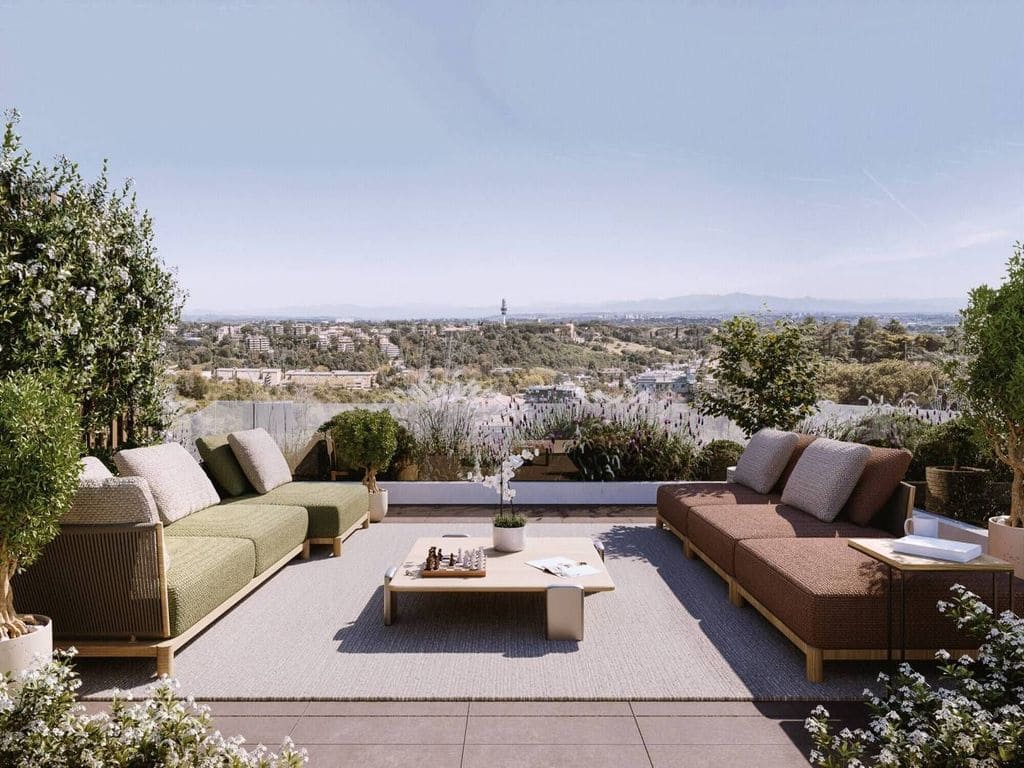
Rome is Italy’s second most expensive major city for property, with an average of €3,237/m² across all property types, per Global Property Guide October 2025 data. That headline understates the premium segment significantly. In the historic centre, around Piazza Navona, Campo de’ Fiori, and the Pantheon, prestige apartments in 17th-century buildings with original architectural detail command €8,000-€12,000/m². A frescoed piano nobile in Palazzo Farnese territory does not have a comparable.
Rome’s luxury market totals €5.62 billion in supply value, 7.9% of the national luxury total, growing 8% year-on-year to 4,230 listings. Apartments represent 91% of Rome’s luxury supply, reflecting the city’s fundamentally urban character. The average time to sell a luxury property in Rome is 3.6 months, virtually identical to Milan, and demand pressure has grown +24% since 2020, the strongest demand trajectory of any major Italian city. With 2,023 listings in Rome alone, the residential market in Latium spans from Christie’s International Real Estate-exclusive Parioli offerings to rooftop penthouses with direct sight lines to the Pantheon. For buyers who want outdoor space in a city that rarely offers it, the finest rooftop residences in Latium represent where the most interesting Rome product concentrates.
Florence now systematically outpaces Rome in prime price growth: Florence’s average of €4,514/m² sits approximately 112% above the national average as of late 2025, against Rome’s 65%, per Global Property Guide data. This is a reversal of the historical relationship between the two cities. The reasons are structural: Rome’s bureaucratic environment for property transaction and renovation permitting is materially harder to navigate than Florence’s, and international buyer demand has shifted accordingly.
Sardinia: The Costa Smeralda Premium and What Lies Beyond It

Sardinia registers an average luxury listing price among the highest of any Italian region outside Milan and the Alpine valleys. That average is driven almost entirely by the Costa Smeralda corridor, specifically Porto Cervo, Cala di Volpe, and Porto Rotondo, where the Aga Khan’s original 1960s development established a luxury standard that has compounded for sixty years.
The Costa Smeralda accounts for €800 million in total luxury supply value, 1.1% of the national luxury total, with just 294 listings across approximately 74,000 m² of total supply. This extreme scarcity defines the market: villas represent 68% of the supply, and the average time to sell stands at 7.2 months, reflecting the highly selective buyer pool. Porto Cervo maintains average values of €19,000/m², with the most exclusive properties exceeding €20,000/m², per Investropa 2025 data. A beachfront property in Porto Cervo with a private pier will be priced well above €15 million, with negotiation limited and timing irrelevant. A more accessible entry point can be found among apartments in Sardinia, where Porto Cervo piazzetta adjacency with a parking space starts around €800,000-€1.2 million.
The island south of Olbia is a different market entirely. Villasimius, in the Cagliari province, and the western Oristano coast offer seafront property at €2,500-€4,000/m² for quality product, with buyer profiles that are primarily Italian and German rather than the international mix driving the north.
“The Costa Smeralda is one of the few Mediterranean coastal markets where the supply constraint is structural and permanent,” explains one senior associate at Knight Frank’s Italian residential team. “The original development agreement limits total built volume. That ceiling does not move.”
Campania: Amalfi, Capri, and the Naples Premium

Campania is driven by three micro-markets that function largely independently of each other: the Amalfi Coast, the island of Capri, and the Naples historic centre.
The Amalfi Coast is architecturally unique and practically difficult. Properties are carved into vertical limestone cliffs between Positano and Ravello, accessible in some cases only by boat or on foot. The build constraint is absolute: nothing new can be constructed, and renovation of existing structures requires navigating one of the most complex permitting environments in Italy. Among coastal villas in Campania, a property in Positano with sea views and a boat mooring can reach €5-€10 million for 200-300 m² of usable space. The price-per-square-metre comparison with Marbella or the French Riviera is meaningless; what is being bought is irreplaceable geography.
Capri operates on supply constraints that make Ibiza look well-stocked. The island of 10 km² has not permitted significant new residential construction in decades. A Villa Krupp-adjacent property in Anacapri, or anything fronting the Faraglioni rocks from the Via Tragara, trades purely on scarcity. The broader apartment market in Campania covers Capri and Amalfi Coast product alongside Naples, where the Posillipo promontory and Chiaia neighbourhood represent the city’s highest residential values at €4,000-€6,000/m² for prime product.
Naples itself requires a note. The Naples luxury market reached a total supply value of €1.01 billion in 2025, up 14% year-on-year, with 760 listings, 96% apartments. Average all-market prices stood at €2,798/m² in October 2025, per Global Property Guide, but that figure covers a market with enormous internal variance. The historic centre, a UNESCO World Heritage Site, contains some of the most extraordinary architectural product in Europe at prices that Rome would not accept. We think the Napoli prime segment is structurally underpriced relative to its cultural and historical weight. That view is not universally shared.
Puglia: The Revaluation That Is Still Happening
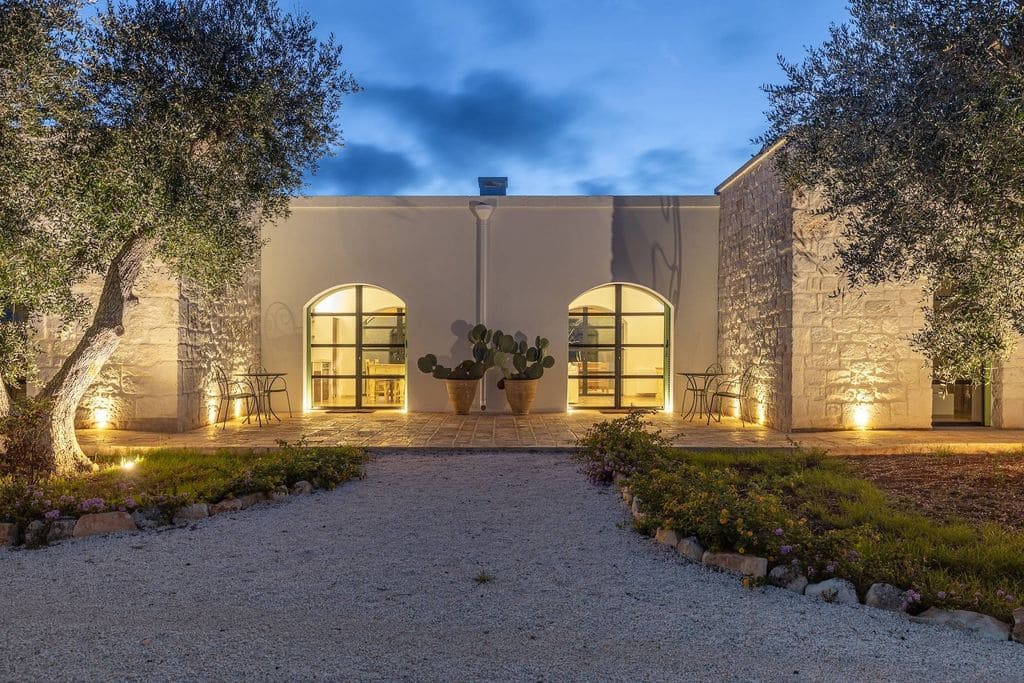
Puglia’s regional average sits at approximately €1,422/m², per Centrarium market analysis (February 2025), making it one of the most affordable regions in Italy by headline number. The luxury segment is a completely different story, and the gap between the regional average and the premium product has been widening consistently since 2015.
The Terra di Bari area, which in the luxury data encompasses the corridor from Bari through Polignano, Fasano, Ostuni, and Alberobello, is Italy’s fastest-growing luxury market in percentage terms: +282% in supply value since 2020, +291% in number of listings. Total luxury supply value reached €621 million in 2025. The Valle d’Itria, the inland triangle between Alberobello, Ostuni, and Martina Franca, is where the international revaluation has been most visible. A restored masseria, the traditional Apulian fortified farmhouse, with a pool, 10 hectares of olive groves, and trulli annexe was selling for €600,000-€900,000 in 2015. The same product now asks €1.5-€2.5 million, and transactions are happening at those levels. Buyers researching this market will find the estate inventory under luxury villas in Apulia, villas represent 65% of the area’s luxury supply, while the masseria and country house typology that drives most international interest is covered under rural properties in Apulia.
The Salento peninsula, the heel of the boot, draws a different buyer. Lecce, with its extraordinary Baroque architecture in golden local limestone, has become a slow-burn destination for Italian and Northern European buyers who want a second home that does not feel like everyone else’s second home. Prices in Lecce historic centre: €2,000-€3,500/m² for restored Baroque palazzi, per local agency data.
“The Puglia buyer in 2025 is not the same buyer as 2019,” notes one senior consultant at a Bari-based luxury advisory. “We are seeing buyers who previously looked at Tuscany deciding that Puglia offers better value, better authenticity, and frankly better food. The Tuscany-to-Puglia shift is real and it is not reversing.”
Sicily: The Market Still Being Discovered

Sicily’s regional average of approximately €1,161/m² is the most misleading number in Italian real estate, and it is the most frequently cited. It includes the post-industrial outskirts of Palermo, abandoned mountain villages participating in €1 house schemes, and tourist-saturated Taormina in the same average. These are not the same market.
The data tells a more precise story. The luxury market along Sicily’s eastern coast, the area covering Taormina, the Val di Noto, and the Catania-Messina corridor, has grown by +222% in supply value since 2020, the strongest five-year growth of any Italian luxury market. Total luxury supply value in the area reached €680 million in 2025. Villas represent 69% of this supply, reflecting the area’s fundamentally residential rather than urban character. Taormina commands €5,000-€8,000/m² for historic centre property, and that premium has grown consistently year-on-year since 2018. The Val di Noto, the Baroque UNESCO corridor in the southeast encompassing Noto, Ragusa, and Modica, is where architectural quality combines with genuine price opportunity. A restored 18th-century palazzo in Noto’s historic centre can still be found at €2,500-€3,500/m², a fraction of what comparable product in Tuscany or Rome would cost.
The villa market in Sicily counts 699 listings, with the Catania and Messina provinces accounting for a large share. The Aeolian Islands, particularly Panarea, Italy’s smallest inhabited island and Europe’s most exclusive archipelago by square metre of ego per visitor, sit in a tier where price is largely irrelevant to the buyer. For urban product, residential property in Sicily’s cities covers Palermo, Catania, and the coastal towns.
We have spent a considerable amount of space on Sicily here. That reflects a genuine editorial view: among all Italian regions, this is the one where the gap between what is available and what the international market has priced in remains the widest. A +222% growth in luxury supply since 2020 is not a rounding error. That gap will not last indefinitely.
Veneto: Venice and the Price of Being Incomparable

Venice is the only city in Europe where the real estate comparison to anything else is structurally invalid. Average prices for the historic lagoon city reached €4,792/m² in October 2025, per Global Property Guide, though this figure refers to the historic centre; the broader municipality including Mestre averages closer to €3,340/m², per Immobiliare.it 2025. In the sestieri of San Marco, Dorsoduro, and Cannaregio, palazzi on the Grand Canal trade at prices that reflect the impossibility of replication rather than any yield calculation.
The logistical reality of owning in Venice: all deliveries by boat, no car access, acqua alta seasonal flooding risk, maintenance costs that are structurally higher than any comparable mainland property. None of this is a deterrent to the buyer this market targets. It is, in some sense, the product. A piano nobile with water access on the Grand Canal is a statement that a penthouse in any other European city cannot match.
Venice dominates the premium inventory among apartments in Veneto, while the Palladian estate market in Veneto covers the extraordinary villa belt between Vicenza and Treviso, where 16th-century Andrea Palladio-attributed buildings with agricultural estates occasionally reach the market. Vicenza’s broader market registered price growth of +15.3% year-on-year in the most recent measured period, per MyDolceCasa data, the strongest of any Italian city in that period. The reason is prosaic: an undersupply of quality residential stock combined with demand spillover from Verona and proximity to the Cortina d’Ampezzo ski circuit. The Dolomites luxury market reached €1.20 billion in total supply value in 2025, up 64% since 2020, with 1,068 listings, a market that has more than doubled in listing count since 2020.
Liguria: Portofino, the Riviera di Levante, and the Market That Does Not Advertise Itself

Average regional prices in Liguria sit at approximately €2,731/m², per IRECOM 2026 data, though this regional average is heavily weighted by inland and peripheral stock. The Riviera Ligure luxury market totals €3.73 billion in supply value, 5.2% of the national luxury total, with 2,781 listings growing +14% year-on-year. Apartments represent 67% of the supply, with villas at 33%, a ratio that has shifted progressively toward apartments over the past six years. That figure does not capture Portofino, because Portofino does not produce enough transactions to register in any aggregate, the province of Genoa records Portofino at over €10,000/m², per Immobiliare.it. A property on the promontory has not been publicly listed in years. This is not a thin market. It is a private one: ownership transfers between HNWI families through advisors, and the asking price is a formality agreed between parties who already know each other.
The practical market for buyers who are not already embedded in that network starts one cove east: Santa Margherita Ligure and the Tigullio Gulf. The seafront villa market in Liguria extends along the Levante coast between Recco and Sestri Levante, with properties in Zoagli, Chiavari, and Lavagna combining direct sea access with a residential scale that the Riviera di Ponente cannot match. The townhouse and palazzo inventory that occasionally surfaces in Santa Margherita and Rapallo is best explored through historic residences in Liguria.
The Cinque Terre requires a different conversation entirely. UNESCO listing and the Ente Parco Nazionale delle Cinque Terre impose restrictions on renovation, new construction, and use that make property ownership here a commitment rather than an investment in any conventional sense. Buyers who understand this, and proceed anyway, are buying access to one of the most architecturally intact coastal landscapes in Europe. The supply of that will not increase.
Genoa deserves a note that most international guides omit. The Financial Times covered Genoa’s growing appeal in the Italian market in 2025, referencing the city’s extraordinary stock of historic palazzi, several of which are UNESCO World Heritage Sites under the Rolli system. Average prices in Genoa sat at €1,706/m² across all property types in 2025, per Immobiliare.it, one of the lowest of any major Italian city. A fully restored piano nobile in Palazzo della Meridiana territory costs a fraction of what comparable product in Florence or Rome would ask. That gap reflects Genoa’s historically low international buyer profile. It will not reflect it indefinitely.
“The Ligurian buyer has always been Italian or French, with a very small Northern European component,” explains one senior consultant at Santandrea Luxury Houses, whose Santa Margherita Ligure office handles the majority of high-end Levante transactions. “What we are seeing in 2025 and into 2026 is the first meaningful wave of buyers arriving because they read about Genoa, not because they already knew the coast.”
Prime transaction prices for seafront villas in the Santa Margherita-Rapallo corridor: €4,500-€8,000/m² for product with direct sea access, private garden, and post-2000 renovation standard, per local agency data. Properties without sea access but with sea views in the same corridor: €2,800-€4,500/m². The gap between those two figures is the geography premium, and it has been stable for over a decade.
Umbria: The Tuscany Adjacent Market That Tuscany Buyers Keep Discovering

Umbria is the only Italian region that neither touches the sea nor borders another country. That geographical insularity has preserved something that the more accessible regions have spent the last twenty years gradually eroding: the sense of arriving somewhere that has not already been fully priced by the international market.
Prices for quality rural product in Umbria average €1,800-€2,800/m², per local agency data cross-referenced with LuxuryEstate.com listings. The same product in the Chianti or the Val d’Orcia would ask 40-60% more. Buyers who have visited both landscapes and concluded that the Umbrian premium does not justify itself are increasingly acting on that conclusion. The Tuscany-to-Umbria flow that began around 2018 has not reversed. The national data on luxury villa prices underlines this opportunity: villa prices per m² have declined 6.5% since 2020 across Italy, meaning that the entry point into Umbrian country property is, in real terms, more accessible today than five years ago.
The restored farmhouse and estate typology that drives most international interest is best explored through country estates in Umbria, which covers inventory from Città di Castello in the north to the Valnerina in the southeast. Buyers drawn instead to the medieval hill town character will find the full range of historic residences, from Todi to Orvieto to Assisi, under luxury properties in Umbria.
Todi is the anchor of the premium market. The American journalist and urban theorist Richard Burdett ranked it the world’s most liveable city in a 1990 study, a classification that attracted a first wave of international buyers and seeded a restoration culture that has since produced some of the finest rural residential stock in central Italy. A fully restored farmhouse with pool, olive grove, and views toward the Tiber valley below Todi currently asks €1.5-€2.8 million, depending on scale and land content.
Orvieto operates on a different logic. The town sits on a volcanic tufa cliff above a valley, and the historic centre is architecturally denser and more urban than Todi. Restored palazzi in Orvieto historic centre with medieval stonework and contemporary interiors: €2,200-€3,800/m², per local agency data. The Duomo di Orvieto, one of the great Gothic facades in Italy, is the kind of view from a kitchen window that no financial analysis captures correctly.
Lake Trasimeno, in the western province of Perugia, is Umbria’s underreported value point. Properties with lake views in the hill communes surrounding the lake, particularly Castiglione del Lago and Panicale, combine the landscape quality of the best Umbrian countryside with water proximity that the purely inland communes cannot offer. Prices here start below €1,500/m² for rural product requiring renovation and rise to €3,500/m² for turnkey lakefront positions.
One comparison that changes the frame: a restored 500 m² farmhouse with 5 hectares of olive groves and a pool in the Todi hills costs approximately €1.4-€1.9 million. In the Chianti, the same property profile asks €2.8-€4.5 million. In the Luberon in Provence, it asks €3.5-€6 million. Either the Umbrian product is undervalued. Or the Chianti and Provençal buyer is paying for a narrative rather than a property. Both things can be simultaneously true.
